
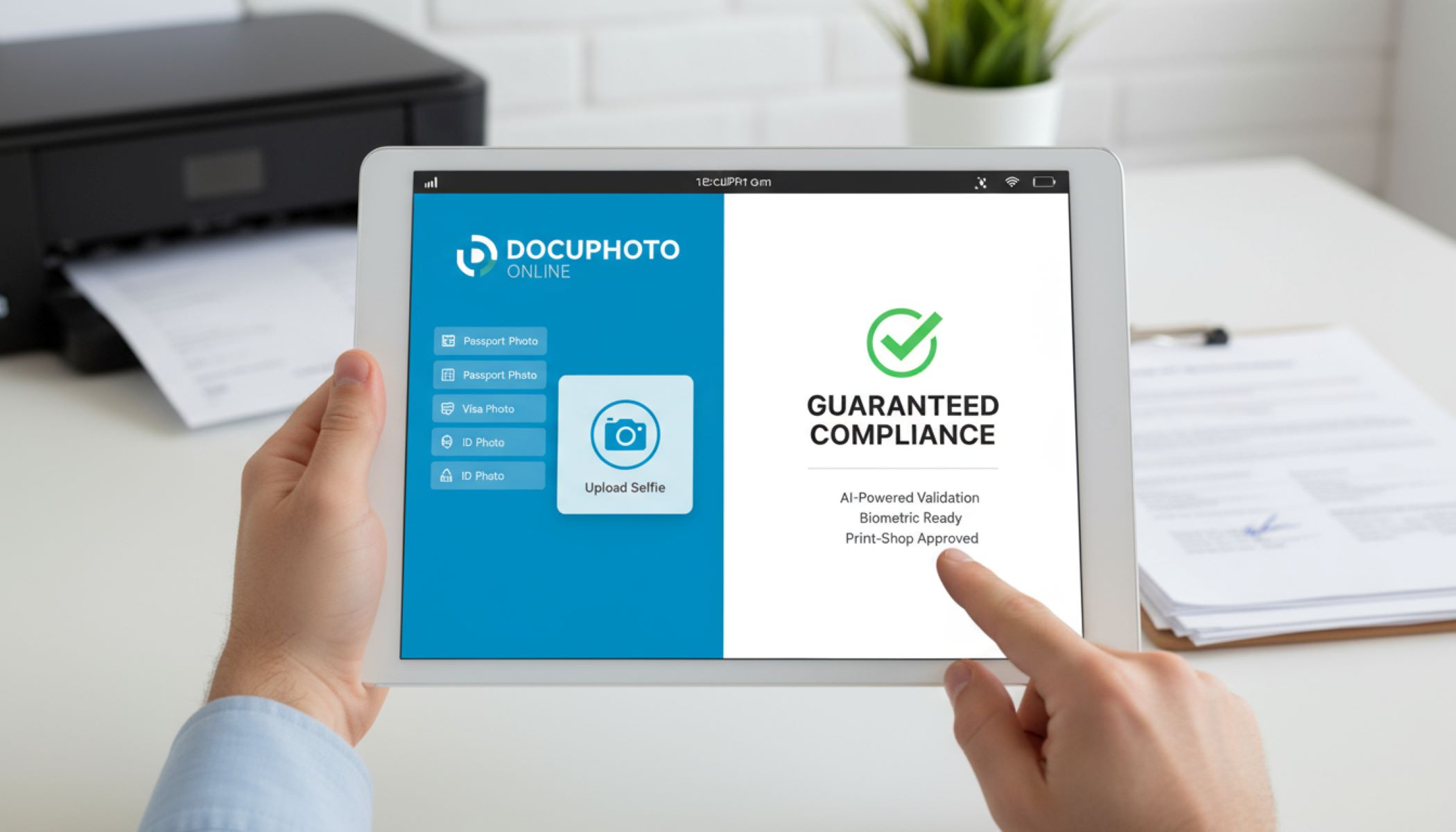
Think about how often you need a proper document photo these days. Whether it’s for a passport, a driver’s license, a visa, or even a job application, that little rectangle of your face is a gatekeeper to opportunities. But here’s the catch—gone are the days when you had to drag yourself to a photo studio every time. Online services for document photos are booming. The real question? Can you trust them?
The Rise of Online Document Photo Services
The way we handle official photos has changed dramatically over the last decade. Previously, getting a passport, visa, or ID photo meant visiting a local photo studio, standing in line, and hoping that the lighting, background, and angle met strict official standards. Photo booths at train stations or malls were convenient but often offered limited quality, leaving users with photos that could easily be rejected. Fast forward to today, and technology has completely reshaped the experience. Smartphones equipped with high-resolution cameras allow anyone to take a photo at home, while specialized apps and online platforms ensure that these images meet official requirements, all without leaving the house.
One of the main reasons online document photo services have gained popularity is convenience. Users no longer have to schedule appointments or adhere to studio hours. These platforms provide instant guidance on positioning, lighting, and facial expressions, ensuring compliance with biometric requirements such as head size, eye placement, and neutral expression. The use of AI algorithms to automatically adjust brightness, remove shadows, and even crop the image accurately has made it possible to generate passport-ready or visa-ready photos within minutes. This convenience has not only saved time but also reduced the stress and hassle that traditionally came with official photo requirements.
However, despite the technological advancements, doubts about reliability remain. Governments and immigration authorities maintain strict standards for document photos, including precise dimensions, background color, and facial orientation. A small deviation can lead to rejection, causing delays in applications and additional expenses. This is why not all online services are equally reliable. While some platforms combine AI with human verification to ensure compliance, others rely solely on automated processes, which may overlook subtle errors that could be critical for official acceptance. Users need to be cautious about which service they choose, considering both technology and track record.
Another important factor contributing to the rise of online document photo services is accessibility. Individuals living in rural or remote areas, where professional studios are scarce, benefit greatly from these digital solutions. Additionally, international travelers and expatriates can create compliant photos without needing to locate a local studio that meets foreign requirements. As these services continue to evolve, features such as instant compliance checks, biometric alignment, and integration with official application portals are becoming standard, making it increasingly likely that online photos will be accepted worldwide. The shift from physical studios to online solutions represents not just convenience but a transformation in how people interact with official documentation in the digital era.
How Online Document Photo Services Work
- Upload Your Photo: The very first step in the process is capturing a suitable photo using your smartphone, digital camera, or even a webcam. The key here is to ensure that your image is clear, well-lit, and shows your face straight-on without any obstructions such as hats or sunglasses. Once you have the photo, you upload it to the platform, which begins the process of transforming it into a fully compliant document photo. This step is crucial because the quality and clarity of the original image will determine how effectively the platform can make necessary adjustments.
- AI-Powered Adjustments: After the photo is uploaded, artificial intelligence takes over to handle multiple adjustments automatically. This includes correcting the background, ensuring it is uniform and matches the required color (usually white or light gray), adjusting brightness and contrast to highlight facial features, and resizing the photo to the exact dimensions required by government authorities. Some AI systems also detect head tilt, eye positioning, and facial alignment, making sure the subject is positioned according to strict biometric standards. The AI essentially acts as a professional photographer and editor rolled into one.
- Compliance Verification: Once the technical adjustments are applied, the platform performs a compliance check. This step involves evaluating whether the photo adheres to official guidelines, such as passport, visa, or ID standards. The system may assess proportions like head size relative to the frame, distance between eyes, shoulder alignment, and expression neutrality. Some services even incorporate human verification, where experts manually review the photo to catch errors that AI might miss. This combination of automated and human checks significantly enhances reliability, reducing the risk of the photo being rejected by authorities.
Types of Online Document Photo Services
| Service Type | How It Works | Compliance Accuracy | Ease of Use | Ideal For |
| AI-Powered Apps | Uses artificial intelligence to automatically adjust background, brightness, head position, and size. | High – AI ensures the photo meets most biometric and official requirements. | Very easy – users only need to upload a photo; most adjustments are automatic. | Individuals looking for fast, reliable photos without much effort. |
| Web-Based Editors | Users manually adjust photos using online tools for cropping, resizing, and background removal. | Medium – relies on user accuracy; errors are more common. | Moderate – requires knowledge of standards and attention to detail. | People comfortable editing photos themselves who want some control over the final image. |
| Professional Hybrid Services | Combines AI adjustments with human verification by experts to ensure compliance. | Very high – both AI and human review reduce errors significantly. | Easy – the process is mostly automated, with expert checks. | Users needing maximum reliability for critical documents like passports or visas. |
| DIY Tools | Provides basic tools to resize, crop, or adjust contrast; compliance is entirely user-managed. | Low – compliance depends on user skill and knowledge. | Moderate – simple interface but requires familiarity with official guidelines. | Users on a budget or doing non-official purposes like resumes or internal company IDs. |
| Mobile Integrated Apps | Fully mobile solutions with real-time guidance, AI adjustments, and direct submission options. | High – AI and real-time tips improve chances of official acceptance. | Very easy – optimized for smartphones, guiding users at every step. | Travelers, remote users, or anyone needing a quick and mobile-friendly solution. |
Benefits of Using Online Document Photo Services
One of the biggest advantages of online document photo services is convenience. Imagine not having to travel to a photo studio, wait in long lines, or schedule appointments around your busy day. With these services, you can take a passport or ID photo from the comfort of your own home, at any time that suits you. This flexibility is especially useful for people with irregular work schedules, parents with young children, or anyone who simply prefers avoiding the hassle of going out for a photo. It’s like having a personal photo studio right on your smartphone.
Another key benefit is speed. Traditional studios may take hours or even days to deliver your finished photo, depending on how busy they are and whether you want prints. Online services, on the other hand, often generate a fully compliant photo within minutes. Some platforms even provide instant AI adjustments and real-time compliance checks, allowing you to immediately download or submit your photo. This efficiency is a huge time-saver, particularly for urgent applications like visa renewals or last-minute job submissions.
Cost-effectiveness is also a major perk. Studio photos can be surprisingly expensive, especially if multiple retakes are needed. With online services, the majority of platforms are significantly cheaper, and some even offer free options for basic needs. You only pay for the final download or prints, which means you don’t waste money on unwanted retakes. For families needing multiple passport photos or for frequent travelers, this can add up to substantial savings over time.
Finally, online document photo services offer control and accessibility that traditional studios can’t match. You can retake photos as many times as needed until you’re satisfied, ensuring your final image meets both personal and official standards. These services are also invaluable for people living in rural or remote areas where professional studios are scarce. By combining accessibility with retake flexibility, online platforms empower users to create high-quality, compliant photos without stress, extra trips, or hidden costs. It truly puts a professional-grade photo booth in your pocket.
Challenges and Risks Involved
- Compliance Issues: One of the primary challenges of using online document photo services is ensuring that the final image strictly meets official requirements. Government agencies, visa authorities, and ID offices have precise standards for photo dimensions, head size, facial positioning, and background color. Even a small deviation, such as a slightly tilted head or an uneven background, can lead to rejection. Users relying solely on automated AI adjustments may face a higher risk of non-compliance if the platform doesn’t accurately follow these strict guidelines.
- Data Privacy Concerns: Uploading personal photos online inherently carries privacy risks. Document photos contain sensitive biometric information, and if a service stores, shares, or mishandles your data, it could be vulnerable to theft or misuse. Some platforms may use uploaded images for AI training or other commercial purposes without clear consent. Users must carefully read privacy policies and choose reputable services to ensure that their personal data remains protected and isn’t exploited.
- Quality Variations: Not all online services produce consistent results. While AI algorithms can automatically adjust lighting, background, and facial alignment, they can occasionally over-edit images, causing unnatural skin tones, blurred features, or distorted proportions. Poor image quality or over-processed photos can affect the acceptance of applications, especially for official documents requiring strict biometric compliance. The reliability of a service is therefore directly tied to the accuracy and sophistication of its technology.
- Hidden Costs and Payment Barriers: Many platforms advertise free services but restrict downloads, high-resolution files, or additional features behind paywalls. Some require subscriptions for multiple retakes or higher-quality outputs, catching users off guard. Hidden costs not only reduce the overall convenience but can also make online services more expensive than initially expected. Awareness of pricing structures is essential to avoid unexpected expenses.
- Limited Human Oversight: While AI-driven services are fast and efficient, relying solely on automation can be risky. Without human verification, subtle errors may go unnoticed, such as slight shadows, reflections in glasses, or incorrect cropping. Hybrid services that combine AI with expert checks tend to be more reliable, but purely automated platforms may not offer this safety net, increasing the risk of rejection for sensitive applications.
Government Standards and Requirements
| Requirement | Description | Common Standards | Why It Matters | Tips for Compliance |
| Dimensions | The official size of the photo required by government authorities. | Typically 2×2 inches (51×51 mm) for US passports or 35×45 mm for EU IDs and visas. | Photos that are too large or small may be rejected, causing application delays. | Use online tools or AI apps that automatically crop to the correct dimensions. |
| Background | The color and uniformity of the background in the photo. | White or light-colored, smooth, and shadow-free. | A non-compliant background may interfere with facial recognition and biometric verification. | Stand in front of a plain wall or use AI-powered background removal tools for accuracy. |
| Expression | Facial expression and positioning for official purposes. | Neutral expression, mouth closed, no smiling, eyes fully visible. | Expressions outside the standard can result in photo rejection or delayed processing. | Maintain a relaxed face; practice in front of a mirror to achieve the correct look. |
| Attire | Clothing and accessories allowed in official photos. | No hats, headgear (unless for religious purposes), uniforms, sunglasses, or flashy accessories. | Non-compliant attire can obscure facial features and cause biometric recognition issues. | Remove hats and glasses; avoid bright patterns; follow any country-specific attire rules. |
| Lighting | Proper illumination to ensure clarity and visibility of facial features. | Even lighting, no glare, shadows, or reflections on the face. | Poor lighting can distort features and make photos invalid for official use. | Use natural daylight or soft artificial light; avoid direct overhead or side shadows. |
Comparing Online Services vs. Traditional Studios
When it comes to convenience, online document photo services clearly have the upper hand. With just a smartphone and an internet connection, you can take and process a passport or ID photo anytime, anywhere. There’s no need to schedule appointments, travel to a studio, or wait in line, which saves both time and effort. For busy professionals, parents, or people living in remote areas, this level of convenience is a game-changer. Traditional studios, on the other hand, require physical presence and often involve waiting for the next available slot, making them less flexible for spontaneous needs.
In terms of cost, online services are generally more affordable than traditional studios. Studio photos often charge for multiple retakes, lighting adjustments, or print copies, which can quickly add up. Online platforms usually offer lower prices, and many provide free previews or basic retakes without additional fees. This makes online services particularly attractive for families, students, and frequent travelers who need multiple document photos. On the flip side, while studios may cost more, the price often includes professional-grade equipment and in-person guidance.
When we look at accuracy and compliance, the comparison becomes more nuanced. Online services rely on AI algorithms and sometimes human verification to ensure that photos meet official standards. While many platforms achieve high accuracy, errors can still occur, especially if the user’s original photo is poorly taken. Traditional studios, however, have trained photographers who are familiar with official requirements and can provide immediate corrections, resulting in consistently reliable photos. For critical documents like passports or visas, studios often offer peace of mind that an online service may not fully guarantee.
Finally, privacy, retakes, and control are important factors to consider. Online services allow unlimited retakes until the user is satisfied, giving full control over the final photo. However, uploading sensitive biometric data online raises privacy concerns, as not all platforms handle data securely. Traditional studios usually provide fewer retakes, often requiring extra payment for additional copies, but the photos remain private and stored locally. The trade-off is clear: online services excel in convenience and flexibility, while studios offer guaranteed compliance and security for sensitive documents.