
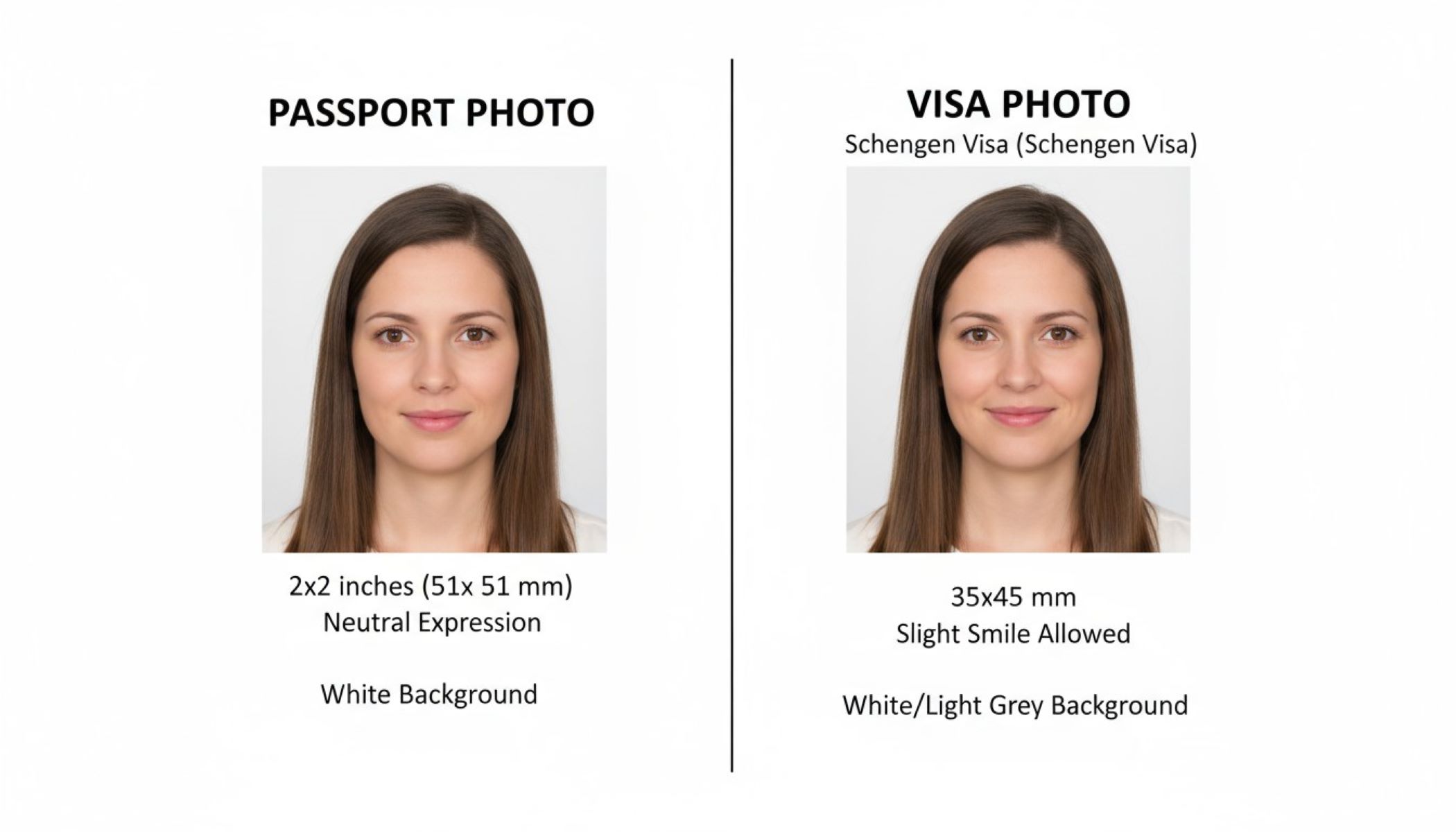
When it comes to international travel, one of the most overlooked yet crucial details is the photo you submit with your documents. Whether it’s a passport or a visa, that little picture can make or break your application. Many people assume that a passport photo and a visa photo are the same thing. Spoiler alert: they’re not. While they may look similar at first glance, the requirements, dimensions, and acceptance criteria can vary dramatically depending on the country. In this article, we’ll dive deep into the differences between a passport photo and a visa photo. We’ll explore everything from size and background requirements to facial expressions and clothing guidelines. By the end, you’ll know exactly what sets these two apart—and how to avoid costly rejections.
Understanding the Purpose of Passport and Visa Photos
When it comes to international travel, passport and visa photos are far more than just simple snapshots of your face—they are critical identifiers used by governments around the world to verify your identity. A passport photo is essentially your official travel ID. It is included in your passport booklet and is intended to remain valid for many years, often matching the lifespan of your passport itself. This photo must be precise, standardized, and meet strict biometric requirements so that it can be easily recognized by immigration officers and automated systems at airports and borders. It’s not just about looking presentable; it’s about creating a reliable reference for security purposes.
A visa photo, on the other hand, serves a slightly different role. While it also represents your identity, it is tied specifically to your entry request for a particular country. Visa photos are usually submitted along with your application forms and may have unique specifications depending on the country issuing the visa. Unlike passport photos, which are universal in their requirements, visa photos can vary in size, background, and digital submission standards. This means that even if your passport photo is perfect, you might still need a separate photo that aligns with the specific visa guidelines.
Think of the passport photo as a permanent key to your identity in the global travel system. It establishes who you are and acts as a long-term proof of identity recognized internationally. A visa photo, by contrast, is more like a temporary pass or ticket that grants you permission to enter another country. It ensures that the authorities at your destination can quickly and accurately confirm that the person applying for entry is the same person showing up at the border. Both serve the critical function of identification, but their applications and longevity are different.
In essence, these two types of photos complement each other within the travel ecosystem. The passport photo maintains your long-term identity record, while the visa photo facilitates short-term verification and access to specific countries. Understanding their distinct purposes helps travelers avoid common mistakes, such as using the wrong photo for a visa application, which can lead to delays or even rejections. By treating each photo as a unique requirement rather than interchangeable, you ensure smoother processing and a hassle-free travel experience.
Why Photo Requirements Differ Between Passport and Visa
- Standardization Across Countries: Passport photos follow internationally recognized guidelines, making them relatively uniform across most nations. This ensures that immigration officers, airport scanners, and biometric systems can quickly recognize and verify identities without confusion.
- Country-Specific Visa Rules: Unlike passports, visas are tailored to the entry requirements of individual countries. Each nation may have its own specific rules regarding photo dimensions, background colors, digital formats, and even facial expressions. This ensures that the photo meets local verification standards and aligns with their immigration systems.
- Purpose of the Document: Passports act as a long-term identification document, valid for several years, and need to be universally recognizable. Visas, on the other hand, are temporary permissions to enter a country. Their photos serve more immediate verification purposes and may be scrutinized according to country-specific security protocols.
- Security Considerations: Both passport and visa photos are used to prevent identity fraud, but visa photos may include additional specifications to reduce the risk of manipulation or forgery. Some countries enforce stricter background shades, clothing rules, or even digital resolution requirements to maintain security integrity.
- Technological Requirements: Passport photos are often designed to comply with global biometric systems, which can accept a standard format. Visa photos may require higher resolution, exact pixel dimensions, or specific file formats for online submissions, reflecting the varying technological standards of different embassies.
- Consistency in Travel Documents: Having standardized passport photos ensures smooth travel across multiple countries without the need for repeated checks or rejections. Visa photos, however, are assessed individually for each country, meaning what works for one nation may be unacceptable for another.
Key Differences at a Glance
| Feature | Passport Photo | Visa Photo | Typical Requirements | Common Pitfalls |
| Purpose | Long-term identification in travel documents | Country-specific entry approval | Passport establishes your global identity; visa grants permission for entry | Confusing one photo for both can lead to rejection |
| Size | Commonly 2×2 inches (51×51 mm) | Varies (35×45 mm is popular, but depends on country) | Check embassy or passport office for exact dimensions | Using wrong dimensions can delay application |
| Background | Usually plain white or off-white | White, light gray, or specified shades | Must be free of patterns, shadows, or objects | Shadows, textures, or colored walls can cause rejection |
| Expression | Neutral, both eyes open | Neutral, some countries allow slight smile | No exaggerated expressions, closed mouth, face fully visible | Smiling too broadly or frowning can be invalid |
| Head Coverage | No hats or coverings (except religious) | Often same, but some countries stricter | Head and face fully visible; religious coverings must not hide features | Hats, sunglasses, or large jewelry can be rejected |
| Clothing | Everyday clothing, no uniforms | Everyday clothing, some countries stricter | Avoid uniforms, logos, or distracting accessories | Wearing uniforms or bright patterns may trigger rejection |
| Digital Specs | Standardized for biometric systems | Pixel size, resolution, and file size can differ | Passport often 600×600 px; visa may require specific file types (JPEG/PNG) and size limits | Uploading incorrect format, low resolution, or large files can fail submission |
| Longevity | Valid for the life of the passport (typically 5–10 years) | Only valid for the duration of the visa | Passport photo must be consistent with biometric data | Using an old passport photo for a new visa may be rejected |
| Lighting | Even lighting with no shadows | Even lighting; some countries stricter about shadows | Natural or soft artificial light recommended | Uneven lighting can obscure facial features |
| Facial Visibility | Entire face visible, neutral expression | Entire face visible; minor expression allowed | Both eyes open, mouth closed; no obstructions | Hair, glasses, or makeup reflecting light can obscure identification |
Passport Photo Requirements
Passport photos are one of the most essential parts of your travel documents, serving as the visual proof of your identity. They are used by immigration officers, airline personnel, and government agencies to confirm that you are who you say you are. Because of this, every detail of a passport photo—from size to lighting—must be precise and standardized. Even small mistakes like shadows, uneven lighting, or an incorrect background can result in your application being delayed or rejected, making it vital to follow the guidelines carefully.
The size of a passport photo is one of the most strictly enforced requirements. In the United States, the standard size is 2×2 inches (51×51 mm), but other countries may have slightly different measurements, such as 35×45 mm in the UK, Canada, and India. This might seem like a minor difference, but immigration systems use exact dimensions for biometric verification. A photo that is too large or too small can be automatically rejected by the passport processing system, even if the image itself is perfect.
Background rules are equally important when it comes to passport photos. Most countries require a plain white or off-white background to ensure that the face is clearly visible. Any patterns, textures, shadows, or objects in the background can interfere with facial recognition systems and human inspection. The goal is to create a clean, distraction-free image where your face is the sole focus, allowing for consistent identification across different checkpoints and international borders.
Facial expression and clothing guidelines also play a critical role. A passport photo should show a neutral expression with your mouth closed, and both eyes must be fully open while looking directly at the camera. Clothing should be normal everyday wear, avoiding uniforms or attire that might obscure your face. Religious head coverings are allowed, but they should never hide facial features or interfere with identification. Following these rules ensures your passport photo is accepted without hassle and remains valid for years of international travel.
Visa Photo Requirements
- Country-Specific Rules: Visa photos are governed by the rules of the country you are applying to. Each nation can have unique requirements regarding size, background, and even acceptable facial expressions, making it essential to check embassy guidelines before submission.
- Common Visa Sizes: The most frequently used size for visa photos globally is 35×45 mm, but this can vary. For example, the United States requires a 2×2 inch (51×51 mm) photo, while countries like China, the Schengen states, and Australia may require 33×48 mm or other specific dimensions. Using the wrong size can lead to automatic rejection.
- Background Colors: Unlike passport photos, visa photos sometimes allow a wider range of background colors. While plain white is the safest choice, some countries accept light gray or cream shades. Certain embassies specify exact shades to prevent photo manipulation, making it important to follow their instructions precisely.
- Expression Flexibility: Visa photos often allow slightly more relaxed expressions compared to passports. While a neutral expression is still preferred, some countries permit a slight smile as long as teeth are not showing. Exaggerated smiles, frowns, or other expressions can result in rejection, so subtlety is key.
- Clothing Guidelines: Similar to passport photos, visa photos require normal, everyday clothing. Bright patterns, uniforms, or accessories that distract from the face are discouraged. Religious head coverings may be allowed, but the face must remain fully visible at all times.
- Glasses and Accessories: Most countries now require that glasses be removed for visa photos to prevent glare or obstruction of facial features. Large jewelry, hats, or other headgear not tied to religious practice should also be avoided to ensure full facial visibility.
- Lighting and Shadows: Visa photos must have even lighting with no shadows on the face or background. Poor lighting, reflections, or uneven shadows can interfere with both human verification and biometric recognition systems.
The Importance of Dimensions
| Aspect | Passport Photo | Visa Photo | Reason for Requirement | Common Issues |
| Size Standardization | Commonly 2×2 inches (51×51 mm) or country-specific standard | Varies by country (35×45 mm, 33×48 mm, or 2×2 inches) | Ensures photos fit automated biometric and facial recognition systems | Using incorrect size can result in automatic rejection |
| Global Consistency | Passport photos follow international guidelines | Visa photo size depends on each country’s entry system | Standard sizes make passports universally recognizable | Using a passport photo for a visa may not comply with local requirements |
| Biometric Accuracy | Designed to meet global biometric scanning specifications | Must match the scanning and storage requirements of the target country | Consistent dimensions allow software to accurately detect facial features | Misaligned or cropped faces reduce recognition accuracy |
| Impact on Processing | Uniform dimensions speed up passport processing | Incorrect visa dimensions can delay or reject application | Ensures the identity verification process is smooth and fast | Non-standard sizes may require resubmission and extra fees |
| Practical Example | Fits all standard passport slots in machines worldwide | Some Schengen countries require 35×45 mm for entry | Using the right size prevents “puzzle piece” mismatches | Submitting a 2×2 inch photo for a 35×45 mm visa can cause delays |
| Digital Requirements | Typically standardized resolution and DPI | Pixel dimensions and file size vary per embassy | Digital size ensures clarity in online submissions | Low-resolution or oversized files may be rejected |
Background Colors: Not Just White
When most people think of official photos, a plain white background immediately comes to mind. For passports, this assumption is correct—almost all countries require a white or off-white backdrop. The purpose of a neutral background is to ensure that the face is clearly visible without any distractions. Patterns, textures, or shadows can interfere with both human inspection and automated biometric systems, which rely on consistent contrast and lighting to accurately capture facial features. A clean, white background helps immigration officers instantly focus on the person rather than the surroundings.
Visa photos, however, introduce a little more flexibility. Depending on the country, embassies may accept backgrounds that are not purely white. Light blue, light gray, or even cream tones are often permissible, provided they are uniform and do not contain any patterns or objects. These variations can help differentiate visa photos from passport photos for countries that manage large volumes of applications. Even small changes in shade can make a difference in digital scanning systems, so applicants need to pay close attention to the specific requirements listed by the embassy or consulate.
This subtle difference in background rules can easily trip up travelers. Many applicants assume their passport photo will automatically work for a visa application, only to find that the shade or tone of the background is unacceptable. Using the wrong background color can lead to delays, resubmissions, or outright rejection of the visa application. It’s one of the most common reasons why applicants have to redo photos, even when all other aspects like size and expression are correct.
To avoid mistakes, it’s always best to check the official guidelines for the country you are applying to. If in doubt, using a plain white background is usually safe, but for countries that allow alternative shades, adhering to their exact specifications can make the process smoother. Professional photo services are often familiar with these subtle differences and can ensure that your photo meets both the aesthetic and technical requirements for a hassle-free submission.